

Why Motor Imitation Is Foundational in ABA Therapy
When a child learns to clap after watching someone else, they’re demonstrating motor imitation and a foundational skill in early development.
For many children with autism spectrum disorder (ASD), imitation doesn’t develop naturally. This makes it harder to learn communication, play, and everyday skills.
In ABA therapy, motor imitation is often one of the first skills taught because it facilitates learning through observation.
This guide explains what motor imitation is, why it matters so much in ABA programming, and how clinicians teach it effectively.
What Is Motor Imitation in ABA?
Motor imitation is the ability to observe another person performing a physical action and then replicate it.
In ABA therapy, it is typically introduced with a simple instruction such as “do this,” followed by the therapist modeling an action for the child to copy. It can involve several types of movement:
- Gross motor imitation: Large body movements such as clapping hands, raising arms, or stomping feet.
- Fine motor imitation: Smaller, more precise movements like pointing or wiggling fingers.
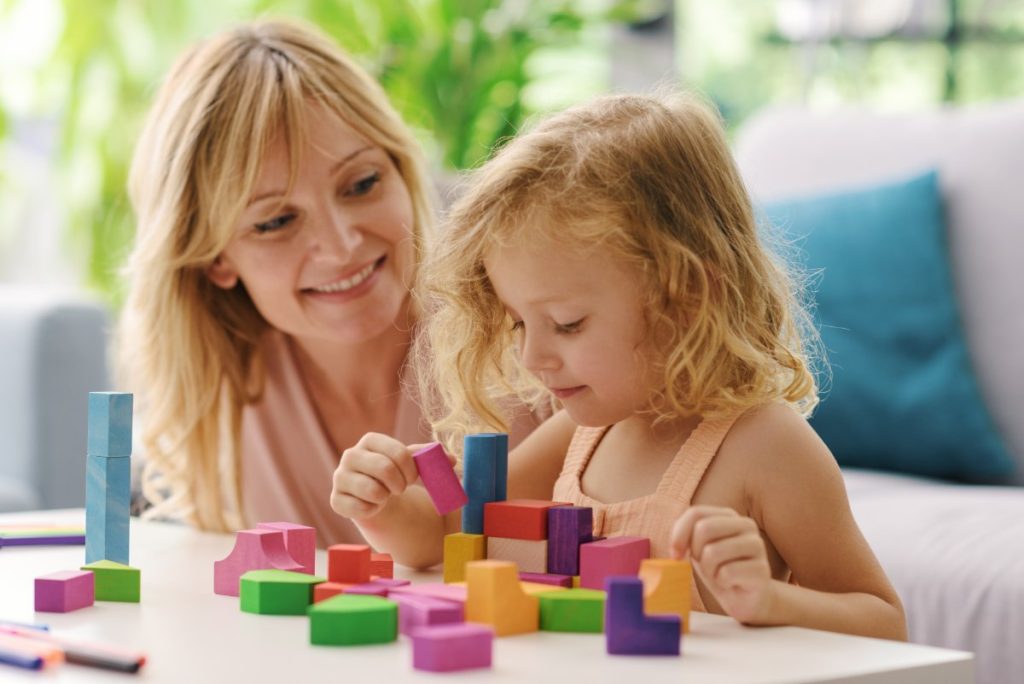
- Actions with objects: Using an object in a specific way after watching someone else, such as stacking blocks, shaking a maraca, or pushing a toy car.
How It Differs from Verbal Imitation
Motor imitation focuses on copying physical movements, while verbal imitation (which differs from tacting) involves repeating sounds, words, or phrases.
Since it does not require existing vocal ability, motor imitation is generally taught first. For example, before a child can learn to say “bye-bye” by copying a parent, they often first learn to wave bye-bye by copying the gesture.
Motor imitation establishes the concept of doing what someone else does, which extends to the vocal and verbal domains.
Key ABA Principles Involved
Teaching motor imitation draws on several core ABA principles:
- Reinforcement: Immediately rewarding successful imitation to increase the likelihood of the behavior occurring again.
- Prompting and prompt fading: Providing physical or gestural assistance, then gradually reducing support over time.
- Discrete trial training (DTT): Structured, repeated practice with clear antecedents, responses, and consequences.
- Natural environment teaching (NET): Embedding imitation opportunities into play and daily routines for better generalization.
- Errorless teaching: Structuring trials so the child is likely to succeed, reducing frustration and building momentum.
The Role of Motor Imitation in Child Development

Motor imitation is not just an isolated therapy target. It is a gateway skill that supports development across multiple domains.
Cognitive Development
Imitation requires a child to attend to a model, process what they see, store that information, and produce a matching response.
This sequence engages working memory, attention, and motor planning, all of which are foundational cognitive skills that support learning across settings.
Social and Communication Development
Much of early social interaction revolves around shared activity. Children who can imitate are better equipped to participate in group play, follow along during circle time, and engage in reciprocal exchanges.
Imitation is also a direct precursor to verbal imitation, which in turn supports expressive language. A child who can copy a gesture like waving is practicing the same observe-and-reproduce skill they will later use to copy sounds, words, and sentences.
Real-World Examples
Motor imitation shows up constantly in everyday life.
A child watches a sibling stack blocks and stacks their own. During snack time, a child copies a peer picking up a cup. In the sandbox, a child observes how another child builds a sandcastle, which objects they use, and the play sequence that accompanies it.
These moments may look simple, but they represent complex learning in action. For children working on motor imitation in therapy, each of these scenarios becomes achievable as the skill develops.
Steps for Teaching Motor Imitation in ABA Therapy
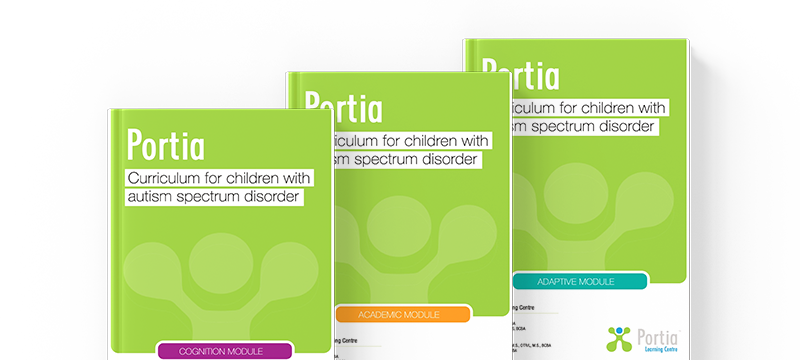
Teaching motor imitation is a structured, progressive process. Below is the approach therapists commonly follow, drawing on methods outlined in Portia’s Imitation Curriculum.
1. Pairing
Before any instruction begins, the therapist needs to establish themselves as a source of positive experiences by following the child’s lead, offering preferred items, and spending time together without placing demands on the child.
A powerful early strategy is to imitate what the child is already doing: if the child bangs a drum, the therapist bangs a drum. If the child pushes a car, the therapist pushes one alongside them.
This builds awareness that actions can be shared and reciprocated, often sparking the child’s interest in watching the therapist more closely.
2. Modeling
Once the child is attending, begin with actions involving motivating objects. The therapist might shake a maraca, then hand the child an identical one and wait.
Object-based imitation is often easier because the object provides a visual anchor and the action is inherently reinforcing. Common early targets include shaking a rattle, pushing a toy car, banging a drum, stacking blocks, and putting a ball in a bucket.
As the child masters object-based imitation, the therapist introduces body movements without objects, such as clapping hands, raising arms, stomping feet, blowing kisses, touching their nose, and waving.
3. Prompting
If the child does not imitate after the model, the therapist provides a prompt.
This might be a full physical prompt (gently guiding the child’s hands to clap), a partial physical prompt (tapping the child’s wrist as a cue), or a gestural prompt (pointing toward the child’s hands).
The level of prompting should match what the child needs to succeed while keeping the experience positive and low-frustration.
| Therapist Tip: Start with actions the child already performs spontaneously. If a child naturally claps when excited, clapping is a strong first target because the motor plan is already in place. You are teaching the child to act on cue, not teaching the action itself. |
4. Reinforcement
Every successful attempt, whether independent or prompted, should be followed by reinforcement.
This could be social praise (“Great job, you clapped!”), access to a preferred toy, or another motivating consequence, depending on the child’s individual reinforcement profile.
Over time, you can thin the reinforcement schedule as the skill becomes more fluent.
5. Fading & Generalizing
Over successive trials, systematically fade the prompts so the child responds to the visual model alone.
As the child masters individual targets, therapists expand by introducing novel untrained actions to test for generalized imitation, chaining two or more actions together (e.g., clap then stomp), and practicing in new settings with new people.
The ability to imitate a novel action without specific teaching is a significant milestone. It signals that the child has learned the concept of imitation itself, not just a collection of individual responses.
The Portia Imitation Curriculum within our Portia ABA Curriculum organizes targets by support level:
- Individuals with high support needs focus on actions with objects and gross motor movements
- Moderate support needs target group-setting imitation, such as circle time
- Lower support needs to focus on spontaneous imitation without a specific “do this” instruction.
Common Challenges and How to Overcome Them
Limited Attention or Engagement
If a child is not attending to the model, they cannot imitate it. Ensure pairing is strong, use preferred items to gain attention, reduce environmental distractions, and try imitating the child first to build reciprocal engagement.
Motor Planning Difficulties
Some children understand what is being asked but struggle to coordinate the movement.
Use full physical prompts to help the child “feel” the pattern, break complex actions into smaller components, and consult with occupational therapists if motor difficulties are significant.
Difficulty Generalizing
A child may imitate reliably in structured sessions but not in natural settings. This is one of the most common challenges in ABA programs and is not unique to imitation.
Teach with multiple examples from the beginning (different objects, settings, people), embed targets into play routines, and train caregivers to run imitation trials at home. Use data to confirm whether the skill actually transfers across contexts.
Tracking Progress Over Time
Consistent data collection helps identify what’s working and where adjustments are needed. ABA software for Behavior Analysts can help you by tracking progress, prompting consistency, and highlighting skill development over time.
Data Collection and Progress Tracking
Effective ABA programs depend on reliable data collection.
For motor imitation, clinicians need to track whether each trial was correct, incorrect, or prompted; the prompt level used; the specific target; generalization probes across settings and people; and maintenance checks over time.
How Portia Supports Motor Imitation Tracking
Using the PortiaPro mobile app (available on Apple and Android), therapists record target data in real time during sessions. All entries are time-stamped.
Key features include:
- Trial-by-trial data entry: Record correct, incorrect, and prompted responses for each target within the session.
- Teaching procedures on-device: View full teaching procedures, generalization-at-home ideas, and target images directly from the app.
- Graphing and reporting: Pull up visual graphs to review progress, identify plateaus, and adjust programming based on real data.
- Offline functionality: The app works without Wi-Fi, allowing in-home therapists to collect data reliably regardless of internet access.
When data is collected consistently, clinical teams can identify targets ready for maintenance, determine when prompt fading should accelerate, recognize generalized imitation, provide documentation for insurance and funders, and share meaningful updates with families.
Parent and Caregiver Involvement
Children spend the majority of their waking hours outside therapy.
If imitation is only practiced during structured sessions, the child misses hundreds of natural learning opportunities each week. When caregivers know how to create and reinforce imitation moments at home, skills generalize more quickly and last longer.
Practical Tips for Caregivers
- Mirror your child during play. Sit across from them and copy what they do. This builds reciprocal awareness.
- Model actions with favorite toys. Show a simple action, hand them an identical toy, and wait.
- Use daily routines. Brushing teeth, waving goodbye, and clapping after a song are all natural imitation opportunities.
- Celebrate every attempt. Even approximate imitations deserve encouragement. Reinforcing the act of trying builds motivation.
- Coordinate with the therapy team. Ask your BCBA which targets are active and how to support them at home. Portia’s teaching procedures include generalization-at-home ideas for each target.
Summary
Motor imitation is one of the most important early skills targeted in ABA therapy. It is the mechanism through which children learn to engage with the world by watching, copying, and eventually creating.
With the right strategies and support, children can build these skills step-by-step to unlock greater independence.
Start Your Free Trial Today
Better experience for your customers, fewer headaches for your team. You’ll be set up in minutes.

Start Your Free Trial Today
Better experience for your customers, fewer headaches for your team. You'll be set up in minutes.